

CNC MACHINING CASE STUDY
Stainless Steel Shaft Machining Optimized for Material Use and Production Cost
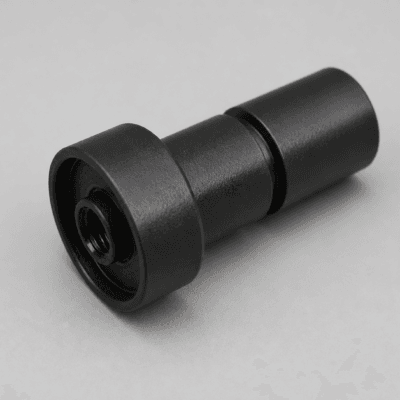
This case study shows how SPM improved stainless steel shaft machining for an SS316 component by reviewing the original part design, raw-material usage and machining route before repeat production. The customer’s original design required 22.56 kg of SS316 material per shaft and included a separate Ø12.7 mm deep-hole drilling operation.
Instead of treating the existing drawing as a fixed manufacturing route, the engineering review focused on a practical question: which features were essential to the shaft’s function, and which parts of the original process were creating avoidable cost? The revised design reduced raw-material weight to 7.8 kg per part and removed the separate deep-hole drilling operation while retaining CNC turning and milling. The resulting unit cost fell from US$159.30 to US$50.35, a reduction of 68.4%.
MANUFACTURING CHALLENGE
Why the Original Shaft Design Was Expensive to Produce
In this stainless steel shaft machining project, the main cost issue was not a single expensive machining operation. It was the combined effect of high SS316 material consumption, a separate deep-hole drilling step and the amount of turning required to remove excess stock. In the original design, each shaft started with 22.56 kg of stainless steel. For a repeat-production component, that amount of material had a direct effect on cost before machining even began.
The original process also required a dedicated Ø12.7 mm deep-hole drilling operation at US$7.80 per part. Although that figure was smaller than the raw-material cost, it still added another manufacturing step, additional handling and a separate operation to the routing. For stainless steel shaft machining, these accumulated process costs matter because the commercial result is determined by the complete production route rather than machine time alone.
High Material Use and Separate Deep-Hole Drilling
Material use: 22.56 kg of SS316 per part.
Raw material cost: US$101.50 per part.
Deep-hole drilling: Separate Ø12.7 mm operation costing US$7.80 per part.
Turning cost: US$43.75 per part.
Lower Material Use with a Simpler Process Route
Material use: reduced to 7.8 kg per part.
Raw material cost: reduced to US$36.90 per part.
Deep-hole drilling: separate operation eliminated.
Turning cost: reduced to US$7.20 per part.
DESIGN & PROCESS OPTIMIZATION
How the Stainless Steel Shaft Machining Route Was Simplified
The optimization started with the part design rather than with a request to increase cutting speed or shorten cycle time. This distinction is important. If a design inherently requires too much stock, a large amount of machining time is already committed before the first toolpath is programmed. Reducing that unnecessary material can therefore create a larger saving than trying to make an inefficient route run slightly faster.
In the revised stainless steel shaft machining plan, the material requirement fell from 22.56 kg to 7.8 kg. That is a 65.4% reduction in raw-material weight. The raw-material cost consequently dropped from US$101.50 to US$36.90 per part, a 63.6% reduction.
This stainless steel shaft machining approach also reduced turning cost from US$43.75 to US$7.20 per shaft, while CNC milling remained unchanged at US$6.25. The result was not achieved by removing all machining. Instead, the revised route used machining more selectively and reduced the amount of work required to reach the finished geometry.
MATERIAL CONSIDERATIONS
Why Material Efficiency Matters When Machining SS316
SS316 belongs to the austenitic stainless-steel family and is selected in many engineered components because stainless steels can provide useful combinations of corrosion resistance, mechanical performance and manufacturability. From a machining perspective, however, material selection is only one part of the cost equation. The quantity of material purchased and the amount that must later be removed can have an equally important effect on the economics of production.
For engineers working on stainless steel shaft machining, technical guidance from the Nickel Institute on machining austenitic chromium-nickel stainless steels discusses machining characteristics and practical considerations for this material family. For buyers and engineers, this type of technical reference is useful when evaluating why rigid setups, suitable tooling and a well-planned machining strategy matter for stainless components.
In this project, SPM did not change the specified SS316 material. The larger saving came from reducing how much of that material was required for each shaft and then simplifying the downstream route. That distinction is central to this stainless steel shaft machining case: the material requirement stayed aligned with the project, while the way the material was converted into the finished part changed significantly.
COST BREAKDOWN
68.4% Unit Cost Reduction After Design Optimization
The commercial impact of the revised stainless steel shaft machining route becomes clear when the individual cost elements are compared. Before optimization, the total manufacturing cost was US$159.30 per part. After redesign and process review, the total fell to US$50.35. At 600 pieces per year, the annual production cost decreased from US$95,580 to US$30,210.
68.4% unit cost reduction
| Item | Before | After | Change |
|---|---|---|---|
| Raw material weight | 22.56 kg | 7.8 kg | −65.4% |
| Raw material cost | US$101.50 | US$36.90 | −63.6% |
| Deep-hole drilling | US$7.80 | — | Eliminated |
| CNC turning | US$43.75 | US$7.20 | −83.5% |
| CNC milling | US$6.25 | US$6.25 | Unchanged |
| Total per part | US$159.30 | US$50.35 | −68.4% |
| Total 600 pcs / year | US$95,580 | US$30,210 | −68.4% |
The largest absolute saving came from raw material, but the process changes reinforced that benefit. Deep-hole drilling was eliminated, turning cost was sharply reduced, and milling cost remained unchanged. This is why the final result should be viewed as a complete stainless steel shaft machining optimization rather than a single-operation cost reduction.
WHEN THIS APPROACH MAKES SENSE
Where Similar Cost-Reduction Opportunities Can Be Found
Not every shaft should be redesigned, and not every machining step should be removed. The value of DFM depends on the geometry, production quantity, required material and functional requirements of the individual component. For low-volume prototypes, a straightforward machining route may still be the most practical option because engineering and process-development effort must also be justified.
Repeat-production stainless steel shaft machining projects are different. When the same component is manufactured month after month, excess stock, unnecessary turning or an avoidable secondary operation is repeated on every unit. Even a modest per-part saving can therefore become significant over a full production year. In this case, the volume of 50 pieces per month made the redesign commercially meaningful.
Signs a Shaft May Be Over-Processed
- Starting stock is much heavier than the finished component.
- Large volumes of expensive stainless steel are removed during turning.
- A secondary drilling operation adds cost but can potentially be avoided through design review.
- Annual quantity is high enough for per-part savings to accumulate.
What Must Still Be Protected
- Material specification and required functional geometry.
- Features that genuinely require turning or milling.
- Production consistency across repeat quantities.
- The customer’s approved design and technical requirements.
The purpose of DFM is therefore not to make a component cheaper at any cost. It is to identify where manufacturing effort is not contributing to the required function and then determine whether the route can be simplified responsibly. For stainless steel shaft machining, this often means looking at material diameter, stock length, turned volume, drilling requirements and the relationship between features before finalizing the quotation.
WHY THIS MATTERS FOR YOUR RFQ
Evaluate the Manufacturing Route Before Locking in Cost
When SPM reviews a repeat-production stainless steel shaft machining RFQ, the quotation can consider more than material price and machine time. For suitable projects, an early manufacturing review can identify whether raw-material usage, turning volume or separate operations are creating recurring cost that may be reduced through design and process optimization.
This SS316 project demonstrates the potential impact. Material use fell by 65.4%, the separate deep-hole drilling operation was removed, turning cost dropped substantially, and the final unit cost decreased by 68.4%. The important point is not that every shaft can achieve the same result. It is that stainless steel shaft machining cost should be evaluated as a complete system of material, geometry and process steps.
If you have a stainless steel shaft machining project or another repeat-production CNC component with high material usage or multiple machining operations, SPM can review the manufacturing route as part of the RFQ process. You can also explore our other manufacturing case studies to see how design and process decisions affect production cost across different components.
Send Your Drawing for a Manufacturing Review
Share the drawing, material, quantity and key requirements so our team can evaluate the production route.