



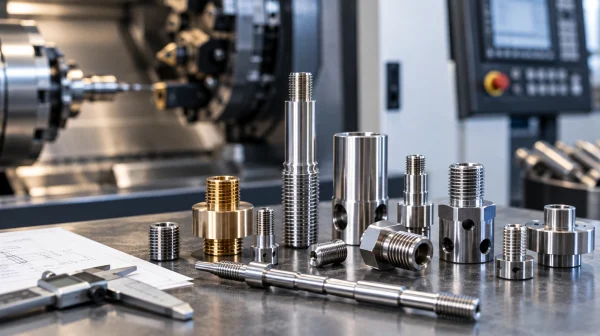
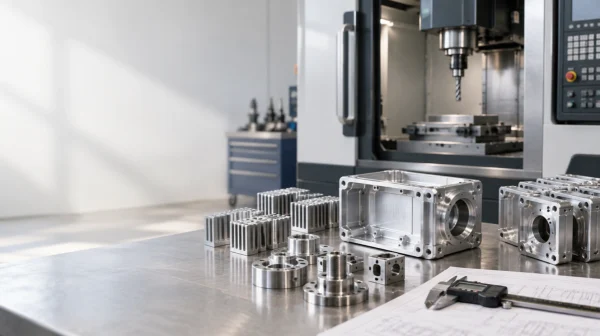
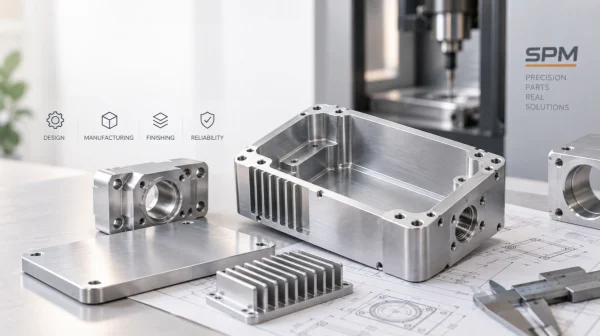
Low-volume CNC machining provides a practical bridge between one-off prototypes and full-scale production. It enables manufacturers to produce small batches of accurate, functional components without committing to expensive production tooling or large inventories.
For engineers, product developers, and OEMs, low-volume CNC machining is especially useful when a design is still evolving, demand is uncertain, or several part variations are required. Parts can be produced in engineering-grade metals and plastics while allowing design revisions between production batches.
This flexibility makes the process valuable not only for prototypes, but also for pilot production, customized components, replacement parts, and bridge production before higher-volume manufacturing begins.
What Is Low-Volume CNC Machining?
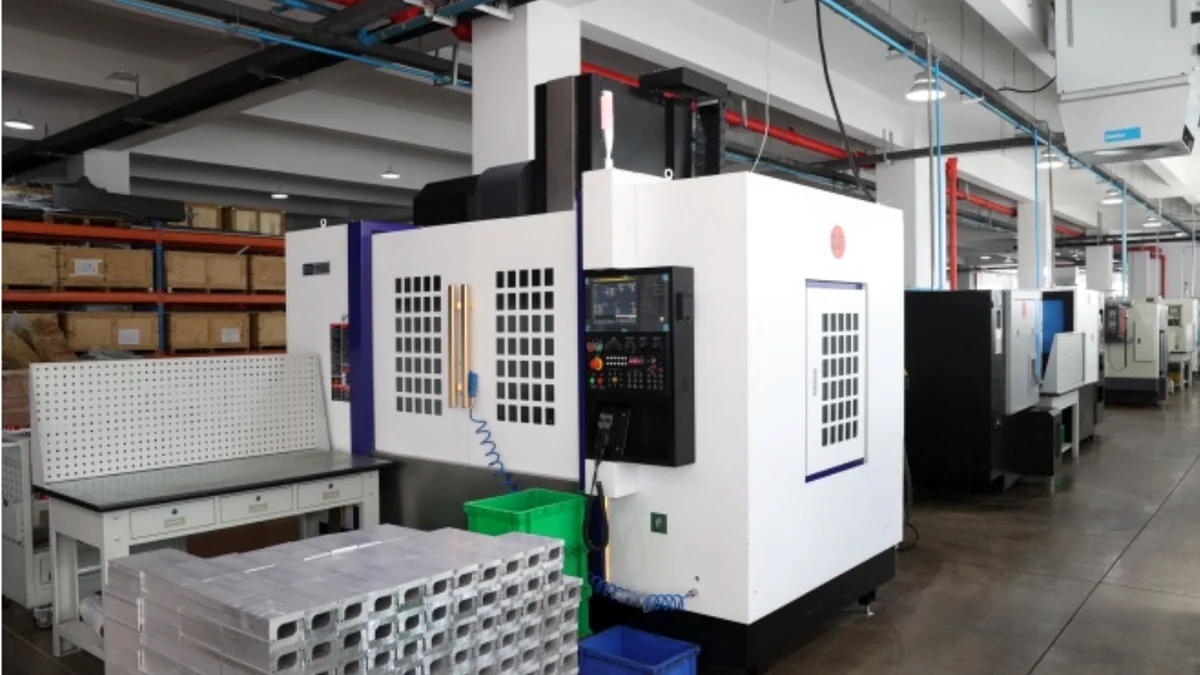
Low-volume CNC machining is the production of relatively small quantities of parts using computer-controlled milling, turning, drilling, boring, and other subtractive machining processes.
There is no universal quantity that defines a low-volume order. Depending on part size, geometry, material, and production requirements, it may range from a handful of components to several hundred pieces and, in some projects, approximately one thousand parts.
Unlike mass-production processes that often rely on dedicated molds, dies, or highly specialized tooling, CNC machining works directly from digital CAD and CAM data. Manufacturers can therefore adjust geometry, tolerances, materials, and production quantities without replacing an entire production tool.
This makes CNC machining particularly useful during early product development and for projects where demand is not yet high enough to justify dedicated tooling. Additional information about early production strategies can be found in our prototyping articles .
Benefits, Materials, and the Low-Volume CNC Machining Process
The value of low-volume CNC machining comes from the combination of relatively low initial tooling requirements, dimensional control, material flexibility, and the ability to modify a design between production runs.
Key Benefits of Low-Volume CNC Machining
Lower Upfront Investment
CNC machining generally avoids the large mold and die investment associated with many mass-production processes.
Design Flexibility
CAD and CAM data can be updated as a design evolves, allowing engineering changes between production batches.
High Precision
Modern CNC equipment can produce controlled dimensions and complex geometry when appropriate machining and inspection processes are used.
Short Production Cycles
Avoiding dedicated production tooling can shorten the path from approved design to finished parts.
Repeatability
Once a machining process has been validated, CNC programs help maintain consistent geometry throughout the production batch.
Broad Material Choice
CNC machining works with many engineering metals and plastics suitable for both functional prototypes and production components.
Materials Used for Low-Volume CNC Machining
Material selection depends on mechanical requirements, operating environment, manufacturability, surface finish, weight, corrosion resistance, and project cost. You can explore related topics in the SPM materials knowledge section .
| Material Group | Common Examples | Typical Reasons for Selection |
|---|---|---|
| Aluminum | 6061, 7075 and other grades | Low weight, machinability and corrosion resistance |
| Stainless Steel | 304, 316, 17-4PH | Strength, corrosion resistance and durability |
| Carbon & Alloy Steel | Various engineering grades | Strength, wear resistance and mechanical performance |
| Brass & Copper | Brass and copper alloys | Conductivity, appearance and corrosion resistance |
| Titanium | Engineering titanium alloys | High strength-to-weight ratio and corrosion resistance |
| Engineering Plastics | ABS, POM, Nylon, PC, PMMA, PEEK | Low weight, insulation, low friction or chemical resistance |
Some materials require specialized cutting tools, machining parameters, workholding strategies, or thermal controls. Material selection should therefore be reviewed together with part geometry and tolerance requirements before machining.
Typical Low-Volume CNC Machining Workflow
CAD Design Review
The 3D model, drawings, tolerances, material requirements, critical dimensions, and surface-finish specifications are reviewed.
DFM and Process Planning
Engineers determine machining strategy, workholding, cutting tools, inspection requirements, and possible design improvements.
CAM Programming and Setup
Toolpaths are generated and machines, fixtures, cutting tools, work offsets, and process parameters are prepared.
Machining
Components are milled, turned, drilled, bored, threaded, or otherwise machined according to the approved manufacturing plan.
Inspection and Finishing
Critical features are inspected before required secondary operations and surface finishes are completed.
Surface-treatment decisions can also affect dimensions, appearance, corrosion resistance, and final cost. Related information is available in our surface finishing articles .
Accuracy, Complex Geometry, and Quality Control
How Accurate Is Low-Volume CNC Machining?
CNC machining is widely used for components that require dimensional accuracy, repeatability, and controlled geometric features. Actual achievable tolerance depends on the machine, material, feature geometry, workholding, tooling, inspection method, and production environment.
Rather than specifying unnecessarily tight tolerances on every feature, engineers should identify the dimensions that directly affect fit, function, alignment, sealing, or assembly.
For reference, the ISO 2768-1 general tolerance standard provides general tolerance classes for certain linear and angular dimensions where individual tolerances are not specified on the drawing.
Factors That Influence Machining Accuracy
- Machine capability and condition
- Part rigidity and workholding
- Tool wear and cutting parameters
- Material stability
- Temperature and machining strategy
- Measurement equipment and inspection planning
Can CNC Machining Produce Complex Parts?
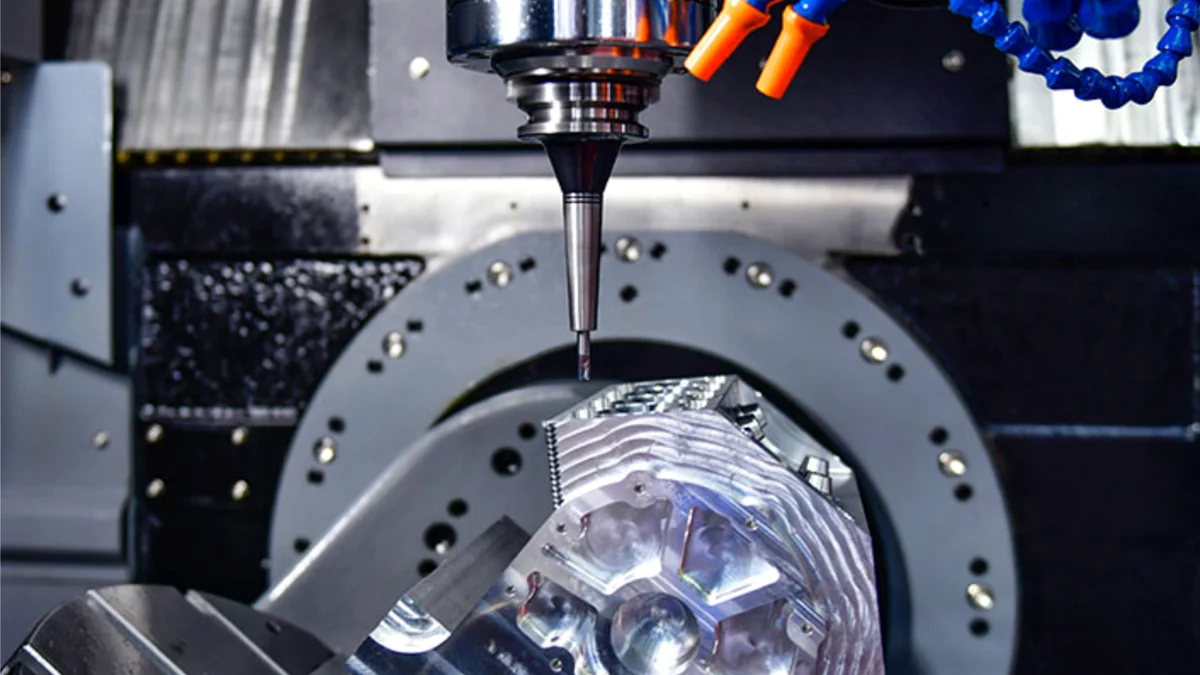
CNC machining can produce many complex external and internal features, including pockets, slots, bores, threads, curved surfaces, angled features, compound geometries, and precision interfaces.
Multi-axis machining further expands design possibilities by allowing cutting tools to approach a component from several orientations while reducing manual repositioning.
However, tool access still matters. Very deep cavities, extremely thin walls, inaccessible internal corners, and features requiring impractically small tools can increase machining time and cost or require a design adjustment.
How Is Part Quality Controlled?
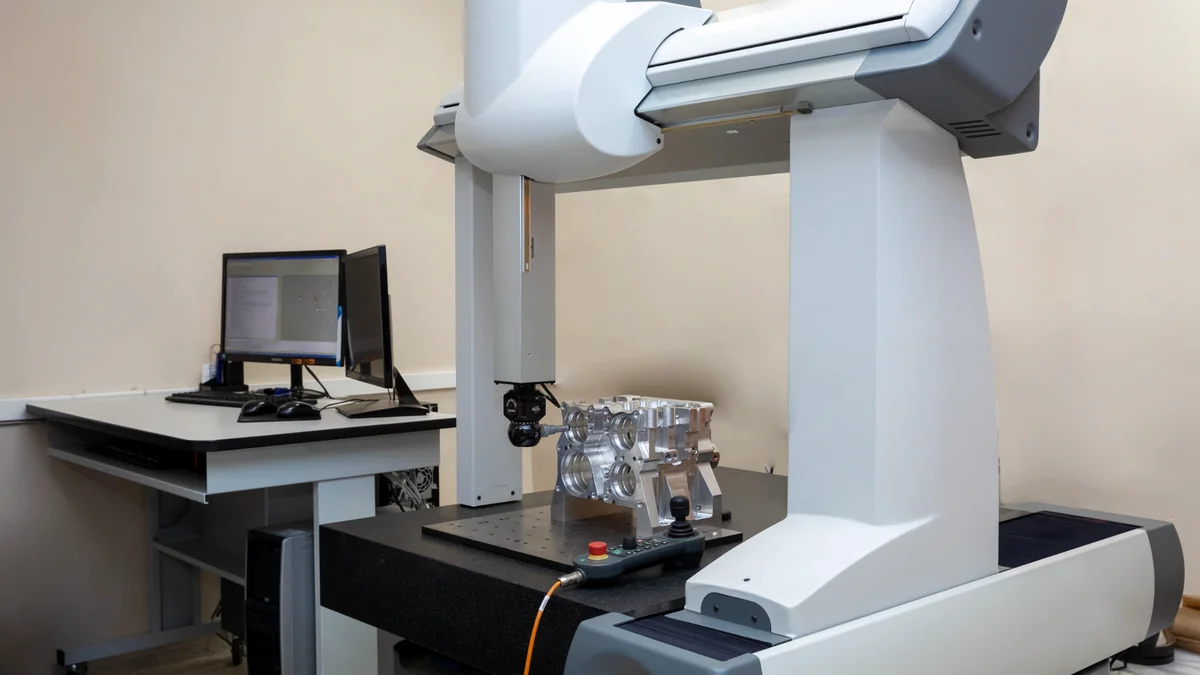
Reliable low-volume CNC machining requires more than a capable machine. Quality depends on process planning, inspection, documentation, and control of critical manufacturing variables.
- Incoming material verification
- First-article inspection
- In-process dimensional inspection
- Caliper and micrometer measurement
- Height gauge and optical measurement
- Coordinate measuring machine (CMM) inspection when required
- Surface-finish inspection
- Final dimensional inspection
- Inspection documentation and traceability when specified
Low-Volume CNC Machining vs. Other Manufacturing Methods
CNC machining is not automatically the best manufacturing process for every project. The right method depends on production quantity, geometry, material, tolerance, surface finish, development stage, and future demand.
| Factor | CNC Machining | 3D Printing | Injection Molding |
|---|---|---|---|
| Initial Tooling | Low to moderate | Low | High |
| Low-Volume Production | Excellent fit | Good fit | Often less economical |
| Material Selection | Very broad | Process dependent | Mainly moldable polymers |
| Precision | High | Technology dependent | High after process validation |
| Design Changes | Relatively easy | Very easy | May require mold modification |
| High-Volume Scalability | Moderate | Limited to moderate | Excellent |
Additive manufacturing is often attractive for rapid design iteration and complex geometries, while CNC machining is particularly useful when production-grade materials, dimensional control, and machined surface quality are important.
Injection molding generally requires significantly greater initial tooling investment, but once the design and tooling are validated it can become economical at much larger quantities.
Lead Time, Cost, and Limitations of Low-Volume CNC Machining
What Determines Lead Time?
Low-volume CNC machining can often move from design approval to finished parts relatively quickly because dedicated production tooling is usually not required. Actual lead time, however, varies significantly between projects.
Important factors include:
- Part geometry and machining complexity
- Number of machining setups
- Material availability
- Batch quantity
- Tolerance and inspection requirements
- Heat treatment and surface finishing
- Special fixtures or cutting tools
- Production capacity
What Affects CNC Machining Cost?
There is no fixed price per part for low-volume CNC machining. Cost depends on the complete manufacturing process rather than order quantity alone.
- Raw material type and stock size
- Machining cycle time
- Number of setups
- Part complexity
- Tolerance requirements
- Tooling and fixture requirements
- Inspection requirements
- Heat treatment
- Surface finishing
- Production quantity
Increasing batch quantity can distribute programming and setup costs across more components. At sufficiently high volumes, however, molding, casting, or dedicated production tooling may become more economical.
Limitations to Consider
- Higher unit cost at very large quantities: CNC machining each component individually can become less economical as production volume increases.
- Tool-access limitations: Cutting tools must physically reach the features being machined.
- Machine-envelope limitations: Maximum component size depends on machine travel and workholding capacity.
- Material-removal time: Parts requiring extensive stock removal may need longer machining cycles.
- Geometry constraints: Thin walls, deep narrow cavities, and inaccessible internal features may need redesign or an alternative process.
Applications, Prototypes, and Bridge Production
Low-volume CNC machining is frequently used where products are highly engineered, demand changes over time, or several customized configurations must be produced.
Automotive
Prototype engine components, brackets, transmission components, test fixtures, performance parts, and limited-production vehicle components.
Aerospace
Development components, structural hardware, housings, brackets, fixtures, and specialized low-volume parts requiring dimensional control.
Medical and Laboratory Equipment
Precision equipment components, housings, fixtures, prototypes, and specialized components manufactured in limited quantities.
Robotics and Automation
Robot joints, end-effectors, mounting plates, sensor housings, structural components, and custom automation hardware.
Electronics and Industrial Equipment
Enclosures, heat sinks, machine components, connectors, jigs, fixtures, and specialized equipment parts.
Functional Prototypes
Low-volume CNC machining is particularly useful when a prototype needs to closely represent the final production component. Engineers can use production-grade materials to evaluate strength, fit, assembly, tolerances, and surface finish.
Bridge Production
The same CNC process can be used for bridge production — producing functional or sellable parts while permanent production tooling is being developed or while market demand is still being validated.
This provides a practical progression from prototype to pilot batch and then to larger-scale manufacturing without requiring a large investment at the earliest stage of development.
Examples of real manufacturing projects and component challenges can be found in our manufacturing case studies .
Is Low-Volume CNC Machining Right for Your Project?
Low-volume CNC machining is a strong option when a project requires accurate parts in limited quantities, frequent engineering revisions, short production runs, or multiple design variations.
It may be particularly suitable when:
- You need functional prototypes in production-grade materials.
- You require tens or hundreds of components rather than mass-production volumes.
- The design may still require engineering revisions.
- Dimensional control is important to assembly or function.
- You want to avoid expensive dedicated production tooling.
- You need multiple customized component variants.
- You are validating market demand before scaling production.
If production volume becomes very large and the design is stable, another process may eventually provide a lower unit cost. Manufacturing decisions should therefore consider not only today’s order quantity, but the expected production lifecycle of the product.
Design choices can have a major effect on machining time and cost. For additional guidance, visit our design and manufacturability articles .
Frequently Asked Questions
What quantity is considered low-volume CNC machining?
There is no universal definition. Depending on component size and complexity, low-volume production may range from a few parts to several hundred or approximately one thousand pieces.
Can CNC machining be used for a single prototype?
Yes. CNC machining is frequently used for one-off functional prototypes, particularly when production-grade materials, dimensional accuracy, or realistic mechanical performance are required.
Does low-volume CNC machining require a minimum order quantity?
Minimum order requirements depend on the manufacturer. CNC machining can technically produce a single part, although programming and setup costs have a greater effect on unit price at very small quantities.
Can the design be changed between production batches?
Yes. One of the key advantages of CNC machining is that geometry can often be revised by updating CAD and CAM data without producing an entirely new mold or die.
Is CNC machining cheaper than injection molding?
For smaller quantities, CNC machining can be more economical because it avoids substantial mold investment. At large production volumes, injection molding can achieve a much lower unit cost after tooling has been developed and validated.
Need help evaluating your design, material, tolerance, or production requirements? Our engineering team is ready to discuss your project and help you determine a practical manufacturing approach.
Contact Us